Your CIBIL score is a three-digit number that can decide whether you get a loan, how much interest you pay, and even whether you get a credit card approved instantly. Banks and NBFCs check it before approving home loans, car loans, personal loans and credit cards. The good news is that you can check your CIBIL score for free, and doing so does not reduce your score.
This complete guide explains what a CIBIL score is, how to check it free online in minutes, what is a good score, how the score is calculated, how to read your credit report, how to fix errors, and practical ways to improve a low score. We also cover new RBI rules that make credit reports more accurate and transparent.
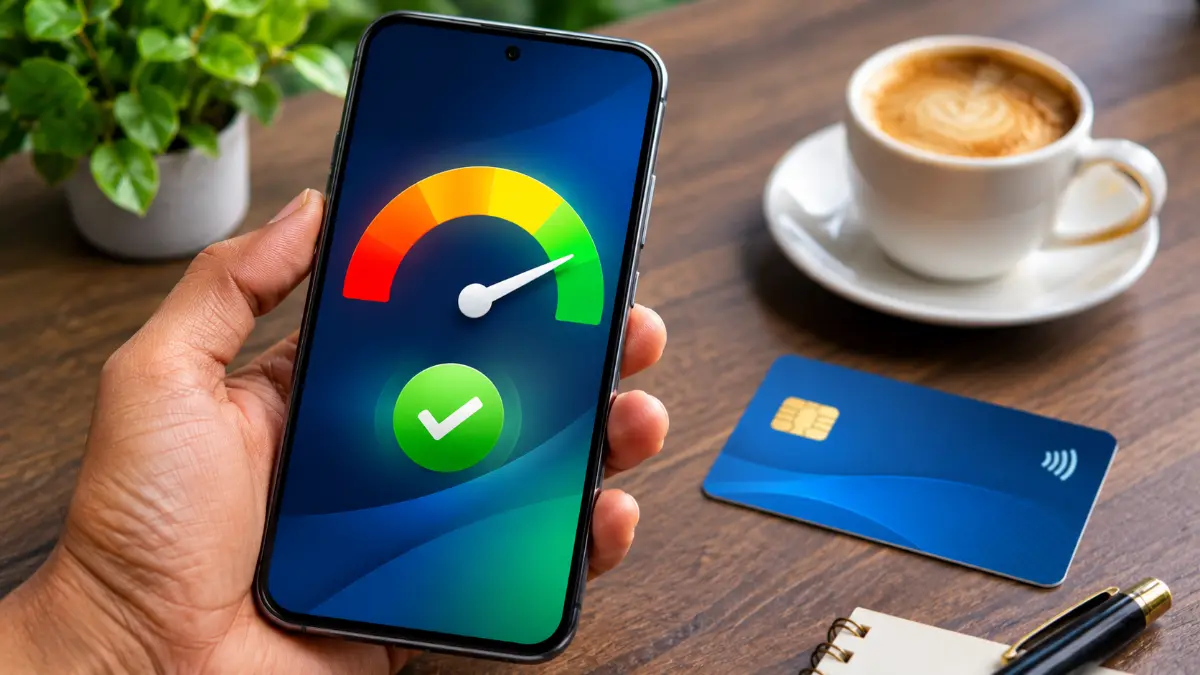
What Is a CIBIL Score?
The CIBIL score is a credit score generated by TransUnion CIBIL, India’s oldest credit information company. It ranges from 300 to 900. A higher number means you are more likely to repay loans on time. The score is based on your credit history: loans, credit cards, repayments, defaults and enquiries reported by banks and financial institutions every month.
Apart from CIBIL, three other credit bureaus operate in India: Experian, Equifax and CRIF High Mark. Each has its own score, and the numbers can differ slightly because lenders may report to different bureaus at different times. However, people commonly use “CIBIL score” to mean credit score in general.
What Is a Good CIBIL Score?
| Score range | Rating | What it means for you |
|---|---|---|
| 750 – 900 | Excellent | Fast approvals, lowest interest rates, higher credit limits |
| 700 – 749 | Good | Most loans approved, reasonable interest rates |
| 650 – 699 | Fair | Approval possible, but at higher interest |
| 550 – 649 | Poor | Many lenders may reject; secured loans more likely |
| 300 – 549 | Very poor | Loan approval very difficult |
| NA / NH (-1 or 0) | No history | You are new to credit; not necessarily bad |
Most banks prefer a CIBIL score of 750 or above for unsecured loans like personal loans and credit cards.
How to Check CIBIL Score for Free on the Official Website
Under RBI rules, every person is entitled to one free full credit report per year from each credit bureau. Here is how to check it on the official CIBIL website:
- Visit www.cibil.com.
- Click Get Your CIBIL Score and choose the free option (avoid paid plans if you only want the free report).
- Create an account with your name, email, password, ID proof (PAN is preferred), date of birth, PIN code and mobile number.
- Verify with the OTP sent to your mobile.
- Answer identity verification questions if asked.
- Go to the dashboard. Your CIBIL score and credit report will be displayed.
The entire process takes about five minutes. You can log in again later to view your free report once a year.
Other Free Ways to Check Your Score
- Bank apps and net banking: Many banks show your CIBIL score free inside their mobile app.
- Fintech and payment apps: Popular apps offer free credit score checks, often from Experian or CRIF.
- Other bureaus: Experian, Equifax and CRIF High Mark also provide one free report per year on their websites.
- Credit card portals: Some card issuers display monthly score updates.
Checking your own score is a soft enquiry and has no effect on your CIBIL score. Only lender enquiries made when you apply for credit (hard enquiries) are counted.
New RBI Rules for Credit Scores
RBI has introduced several customer-friendly rules in recent years:
- Faster updates: From January 2025, lenders report credit information to bureaus at least every 15 days instead of monthly, so your score reflects repayments faster.
- Alerts: Credit bureaus must inform you by SMS or email when a lender checks your report.
- Default intimation: Lenders must notify you before reporting a default.
- Complaint timelines: Disputes must be resolved within 30 days, and you can get compensation of ₹100 per day for delays beyond that period.
- Free annual report: One full free report per year from each bureau, with a link sent to you.
These rules are explained in RBI circulars available on the Reserve Bank of India website.
How Is the CIBIL Score Calculated?
CIBIL does not publish its exact formula, but the main factors are well known:
| Factor | Approximate impact | What it means |
|---|---|---|
| Payment history | Highest | Paying EMIs and card bills on time, every time |
| Credit utilisation | High | Using a small part of your credit card limit |
| Credit mix | Medium | Healthy balance of secured (home, car) and unsecured (card, personal) loans |
| Credit enquiries | Medium | Too many loan applications in a short time lower the score |
| Length of credit history | Low to medium | Older accounts show long-term discipline |
How to Read Your CIBIL Report
The credit report has four main sections:
- Personal information: Name, date of birth, PAN, gender. Check spelling carefully.
- Contact information: Addresses and phone numbers reported by lenders.
- Employment information: Occupation and income, if reported.
- Account information: Every loan and credit card with lender name, account type, open date, sanctioned amount, current balance, overdue amount and a month-wise payment history (DPD – days past due).
- Enquiry information: List of lenders who checked your report in recent years.
In the payment history, “000” or “STD” means the payment was on time. Numbers like “030” or “060” mean the payment was 30 or 60 days late. Remarks like “Settled”, “Written-off” or “Suit filed” are negative.
How to Correct Errors in Your CIBIL Report
Errors such as a loan you never took, a closed account still showing as active, or wrong personal details can pull down your CIBIL score. To fix them:
- Log in to your CIBIL account and open the Dispute Centre.
- Select the section with the error (personal details, account details, ownership, etc.).
- Explain the issue and submit the dispute.
- CIBIL verifies with the lender and updates the report if the lender confirms the error.
- Also contact the lender directly with proof (no-dues certificate, closure letter, statements).
Read our detailed guide on how to remove a wrong loan entry from your CIBIL report for a step-by-step example.
How to Improve Your CIBIL Score
1. Pay Every EMI and Card Bill on Time
Set up auto-debit for EMIs and at least the full credit card bill. A single 30-day delay can drop your score significantly, and the record stays for years.
2. Keep Credit Utilisation Below 30%
If your card limit is ₹1,00,000, try to keep spending below ₹30,000 per billing cycle. Pay before the statement date if you spend more.
3. Avoid Multiple Loan Applications
Each application leads to a hard enquiry. Compare offers using pre-approved checks instead of applying everywhere.
4. Don’t Close Old Credit Cards Without Reason
Old cards with clean history help your average account age. If you want to close a card, read our guide on how to close a credit card permanently to avoid mistakes.
5. Avoid “Settled” Status
Settling a loan for less than the dues marks the account as “Settled”, which hurts your score. Try to pay the full amount and get it marked “Closed”.
6. Build Credit if You Are New
If you have no history, start with a secured credit card against a fixed deposit or a small consumer loan, and repay on time.
7. Monitor Your Report Regularly
Check your CIBIL score every few months to spot errors or fraud early.
How Long Does It Take to Improve a Low Score?
Small improvements can appear within one or two reporting cycles once you clear overdue amounts and reduce card usage. With faster 15-day reporting, positive changes now reflect sooner. However, recovering from serious issues like defaults or write-offs can take 12 to 24 months of consistent good behaviour.
Does CIBIL Score Affect Interest Rates?
Yes. Many banks link home loan and personal loan interest rates to credit scores. A borrower with 800 may get a rate that is 0.5% to 2% lower than someone with 680. On a ₹30 lakh home loan for 20 years, even a 0.5% difference can save several lakh rupees over the loan tenure. That’s why maintaining a high CIBIL score is one of the best financial habits.
Common Myths About Credit Scores
- Myth: Checking my score often lowers it. Fact: Self-checks never reduce your score.
- Myth: Income affects the score. Fact: Salary is not part of the score; repayment behaviour is.
- Myth: Debit card usage builds credit. Fact: Only credit products such as loans and credit cards are reported.
- Myth: Closing all cards improves the score. Fact: It may reduce available credit and increase utilisation, lowering the score.
- Myth: Once low, always low. Fact: Consistent good behaviour can rebuild the score over time.
- Myth: Being a guarantor has no impact. Fact: If the borrower defaults, the guarantor’s report can be affected too.
Impact of Joint Loans and Guarantees
When you take a joint home loan with a spouse or parent, the loan appears in both reports. Timely repayments help both borrowers, while delays hurt both. Similarly, if you stand as a guarantor for a friend’s loan and they miss payments, the lender can report it against you as well. Before signing as co-applicant or guarantor, make sure you trust the borrower’s repayment ability, and keep checking the account status in your report.
What Lenders Check Besides Your Score
A good score is important, but lenders also look at your income stability, existing EMIs, employer category, age, and the purpose of the loan. They calculate the Fixed Obligation to Income Ratio (FOIR), which shows how much of your monthly income already goes to EMIs. Many banks prefer FOIR below 50%. So even with an excellent score, a very high existing EMI burden can lead to rejection or a smaller loan amount.
Credit Score for Students and First-Time Borrowers
Young people often start with no credit history. Education loans repaid on time are an excellent way to build a strong record early. Others can begin with a secured credit card linked to a small fixed deposit, use it for small monthly expenses, and pay the full bill every month. Within six to twelve months, a score is generated, and with discipline, it can cross 750 quickly.
Company Credit Report and CMR
Businesses also have credit reports. CIBIL issues a Company Credit Report and a CIBIL MSME Rank (CMR) for micro, small and medium enterprises, ranging from CMR-1 (lowest risk) to CMR-10 (highest risk). Business owners applying for working capital or term loans should review both their personal score and the company report, because lenders often check both.
Protect Yourself from Credit Fraud
Identity thieves can misuse your PAN or Aadhaar to take loans in your name, which damages your report. To stay safe:
- Never share PAN or Aadhaar copies without writing the purpose and date on them.
- Do not click links in messages promising “instant loans” or “free credit score”.
- Watch for SMS alerts from credit bureaus about enquiries you did not make.
- Review your report at least twice a year and dispute unknown accounts immediately.
- Lock your Aadhaar biometrics when not needed.
Which Bureau Do Banks Use?
Lenders may check one or more bureaus. Home loan lenders often look at CIBIL, while fintech lenders sometimes use Experian or CRIF. Because each bureau calculates scores slightly differently, your numbers may vary by 20–50 points. Focus on the overall trend and keep all reports clean rather than chasing a single number.
Monthly Credit Health Routine
- Pay all dues before the due date.
- Track card utilisation every month.
- Avoid new applications unless necessary.
- Check alerts for new enquiries.
- Review your full report every quarter using free options from different bureaus.
CIBIL Score Needed for Different Loans
| Loan type | Preferred CIBIL score | Notes |
|---|---|---|
| Home loan | 700+ (750+ for best rates) | Secured by property; lenders are slightly flexible |
| Car loan | 700+ | Secured by vehicle; down payment helps |
| Personal loan | 750+ | Unsecured; score matters most |
| Credit card | 750+ | Premium cards may need higher scores |
| Gold loan | No strict minimum | Secured by gold; score has less impact |
| Business loan | 700+ plus business records | Company report and CMR may also be checked |
CIBIL Score After Loan Settlement
If you settled a loan in the past and your CIBIL score dropped, you can still repair it. Contact the lender, pay the remaining difference between the settled amount and the original dues, and request them to update the status from “Settled” to “Closed”. Ask for a written no-dues certificate. Once the lender reports the change, the account will look much better to future lenders, and your CIBIL score will gradually improve with continued timely payments on other accounts.
How Often Should You Check Your CIBIL Score?
Checking your CIBIL score every three months is a good habit for most people. If you are planning a big loan, such as a home loan, check it six months in advance. This gives you time to fix errors and reduce card balances so your CIBIL score is at its best when you apply.
Frequently Asked Questions on CIBIL Score
Is checking CIBIL score free?
Yes. You get one free full report every year from CIBIL and from each of the other bureaus. Many apps also show free scores.
Does checking my own CIBIL score reduce it?
No. Self-checks are soft enquiries and do not affect your score.
What is the minimum CIBIL score for a personal loan?
Most lenders prefer 750 or above. Some may approve at 700, usually at higher interest rates.
Can I check CIBIL score without PAN?
PAN is the preferred ID, but you can also use other IDs like passport, voter ID or driving licence on the CIBIL website.
Why is my score showing NA or NH?
It means you don’t have enough credit history. Start with a small credit product to build your score.
Conclusion
A strong CIBIL score opens the door to faster loan approvals and lower interest rates. Check your score for free on the official website, read the report carefully, dispute errors quickly and follow good credit habits: pay on time, use credit wisely and avoid unnecessary applications. Share this guide with friends who are planning a home loan or credit card this year.
Think of your credit score as your financial reputation. Every bill you pay on time adds a positive mark, and every delay leaves a scar that takes time to heal. The habits you build today will decide the loan offers you receive five or ten years from now. Start by checking your report this week, note any errors, set up auto-pay for all dues, and keep your card spending in control. Small, consistent steps are all it takes to move from an average score to an excellent one. Your future self, applying for a dream home or a business loan, will thank you for the discipline you show now, and lenders will reward you with better terms, higher limits and faster approvals.
Bookmark this page and revisit it whenever you plan a new loan or credit card application.
Stay informed, stay disciplined, and keep growing financially.