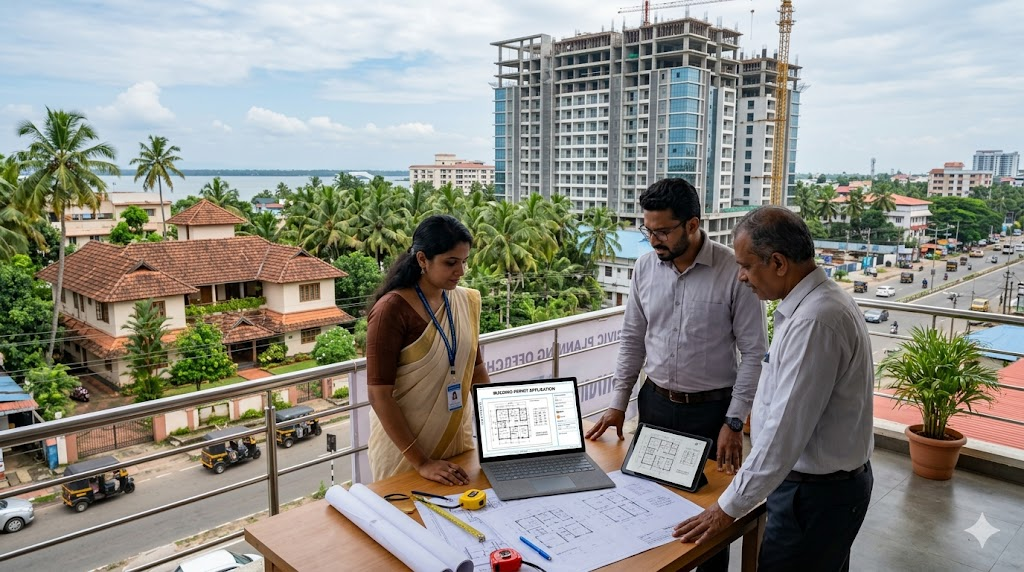
Constructing a residential house, commercial building, or apartment complex in Kerala requires official building permit approval from the concerned local authority. The permit system ensures that all constructions follow government regulations related to safety, land usage, environmental protection, and structural standards.
In 2026, most permit applications are processed digitally through K-SMART Kerala Portal, making the approval process faster and more transparent for property owners and builders.
What is a Building Permit?
A building permit is an official approval issued by the local authority allowing construction according to approved building plans and Kerala municipality or panchayat rules.
Without a valid permit:
- Construction may be treated as unauthorized
- Penalties or demolition notices may arise
- Water and electricity connections may be delayed
- Property registration and resale can face legal complications
The permit system is supervised under the Kerala Local Self Government Department and respective local bodies.
Difference Between Low-Rise and High-Rise Buildings
Low-Rise Buildings
Low-rise buildings generally include:
- Individual residential houses
- Small office or shop buildings
- Structures within the permitted low-height category
These projects usually require simpler approvals and fewer technical clearances.
High-Rise Buildings
High-rise constructions include:
- Multi-storey apartment complexes
- Large commercial towers
- Buildings exceeding prescribed height limits
High-rise projects require stricter compliance and additional approvals related to fire safety, structural stability, and emergency access systems.
Height Limits and Basic Classifications
Kerala building rules classify structures mainly based on height and occupancy type.
- Low-rise buildings are generally smaller structures with limited floors and simpler infrastructure needs.
- High-rise buildings are taller multi-storey constructions that require enhanced safety measures.
The exact height classification and applicable rules may vary depending on municipal regulations, road width, zoning category, and land use permissions.
Approval Authorities Involved
Building permit approvals are usually issued by:
- Municipal Corporations
- Municipalities
- Grama Panchayats
- Local engineering departments
For large or high-rise projects, approvals may also involve:
- Fire & Rescue Services
- Town Planning authorities
- Environmental authorities
- Structural engineering verification
Steps to Apply for Building Permit in Kerala Through K-SMART (2026)
Applying for a building permit in Kerala has become easier through the online K-SMART Kerala Portal. Both low-rise and high-rise building applications are processed digitally by local self-government institutions.
Here is the complete step-by-step process.
Step 1 – Prepare Required Documents
Before starting the application, keep scanned copies of these documents ready:
- Title deed / ownership document
- Latest land tax receipt
- Possession certificate
- Location sketch and site plan
- Building plan prepared by licensed architect or engineer
- Structural drawings
- Aadhaar card or identity proof
- Applicant passport-size photo
- Mobile number and email ID
For high-rise projects, additional documents may include:
- Fire & Rescue clearance
- Structural stability certificate
- Soil test report
- Environmental approval
Step 2 – Visit K-SMART Kerala Portal
Open the official portal:
The portal is managed under the Kerala Local Self Government Department.
Step 3 – Create User Account
- Click “Sign Up”
- Enter mobile number
- Verify OTP
- Create password
- Complete profile details
Existing users can directly log in.
Step 4 – Select Building Permit Service
After login:
- Go to “Services”
- Select “Building Permit”
- Choose your Local Self Government Institution:
- Corporation
- Municipality
- Grama Panchayat
Then choose the application type:
- New building permit
- Building plan approval
- Addition or alteration permit
- Regularisation (if applicable)
Step 5 – Enter Property Details
Fill in:
- Survey number
- Village name
- Ward number
- Property area
- Land classification
- Road access details
- Existing building details (if any)
Ensure all information matches official records.
Step 6 – Upload Building Plans & Documents
Upload all required files in PDF or image format.
Important uploads include:
- Site plan
- Floor plans
- Elevation drawings
- Structural drawings
- Ownership proof
- Tax receipt
For high-rise buildings, upload:
- Fire safety plan
- Lift details
- Parking layout
- Emergency exit plan
Step 7 – Pay Application Fee
The system automatically calculates the permit fee based on:
- Building area
- Occupancy type
- Local body category
- Number of floors
Payment methods usually include:
- UPI
- Net banking
- Debit/credit card
Save the payment receipt for reference.
Step 8 – Submit Application
Carefully verify all details before final submission.
After submission:
- Application number is generated
- SMS/email confirmation is sent
- Status tracking becomes available online
Step 9 – Technical Verification
The local authority conducts verification, including:
- Document scrutiny
- Site inspection
- Plan compliance checking
- Road access verification
- Structural safety review
High-rise projects may undergo additional technical review.
Step 10 – Approval or Correction Notice
If everything is correct:
- Building permit approval is issued digitally
- Approved building plan becomes downloadable
If problems exist:
- Applicant receives correction notice
- Missing documents or violations must be rectified
Important Rules for High-Rise Buildings
High-rise constructions require strict compliance with:
- Fire safety standards
- Structural stability norms
- Parking requirements
- Rainwater harvesting rules
- Emergency evacuation systems
Additional approvals from Fire & Rescue authorities are usually mandatory.
Common Mistakes to Avoid
Avoid these common issues:
- Uploading unclear documents
- Wrong survey details
- Unlicensed building plans
- Boundary disputes
- Incorrect measurements
- Missing safety certificates
These mistakes often delay approval.
Why Approved Building Permit Matters
A valid permit helps ensure:
- Legal construction
- Easier utility connections
- Safer buildings
- Smooth property registration
- Better resale value
- Protection from penalties or demolition notices
Structural and Fire Safety Rules
Safety compliance is extremely important, especially for high-rise projects.
Authorities verify:
- Structural stability
- Fire escape arrangements
- Emergency exits
- Parking requirements
- Rainwater harvesting systems
- Ventilation and sanitation standards
These rules help ensure occupant safety and long-term building durability.
Common Reasons for Permit Rejection
Applications are commonly rejected because of:
- Incomplete documents
- Boundary or ownership disputes
- Unapproved building designs
- Violation of zoning regulations
- Insufficient road access
- Lack of mandatory safety clearances
Carefully checking all submitted documents can reduce delays and rejection risks.
Why Building Permit Approval is Important
Obtaining legal building approval protects property owners from future legal and financial complications. Approved plans also help ensure safer infrastructure development and proper urban planning across Kerala.
Using digital systems like K-SMART Kerala Portal has simplified the Kerala building approval process for both low-rise and high-rise constructions.
Final Thoughts
Whether you are building a small home or a large apartment complex, following Kerala building permit rules is essential in 2026. Proper approvals ensure legal protection, structural safety, and smoother future property transactions.
For official updates and guidelines, applicants can refer to the Kerala Local Self Government Department and the K-SMART online portal.
KSRTC Swift App Bus Booking Guide 2026 – Step-by-Step Online Ticket Booking Process
All OTT, Movie & Web Series Updates in One Digital Hub