
When a vehicle owner passes away, the vehicle does not automatically belong to the family member using it. Legally, the vehicle remains registered in the deceased person’s name until the Registration Certificate (RC) is officially transferred.
RC transfer after death is mandatory under Indian motor vehicle laws. If it is not done on time, legal heirs may face:
- Fines and penalties
- Insurance claim rejection
- Problems during resale or scrapping
- Legal complications during police checks
This guide explains who can apply, documents required, online and offline steps, timelines, and common mistakes, so legal heirs can complete the RC transfer smoothly in 2026.
Who Can Apply for RC Transfer After Death
Who Is a Legal Heir?
A legal heir is a person legally entitled to inherit the deceased person’s assets.
Eligible Family Members
- Spouse
- Son or daughter
- Parents (if applicable)
Single Heir vs Multiple Heirs
- Single legal heir: RC can be transferred directly
- Multiple legal heirs: Consent from other heirs is required (affidavit)
Time Limit for RC Transfer After Death
As per the Motor Vehicles Act:
- Application must be made within 30 days of the owner’s death
- Late applications may attract penalties or additional fees
- Some RTOs allow a grace period, but it is not guaranteed
👉 It is always advisable to apply as early as possible.
Documents Required for Vehicle RC Transfer After Death
Mandatory Documents
- Death certificate of the registered owner
- Original vehicle RC
- Valid motor insurance certificate
- Valid PUC certificate
- ID & address proof of applicant
- Passport-size photographs
Legal Documents
- Legal Heir Certificate or Succession Certificate
- Affidavit from other heirs (if more than one heir)
- No Objection Certificate (if vehicle is under loan or hypothecation)
Forms Required
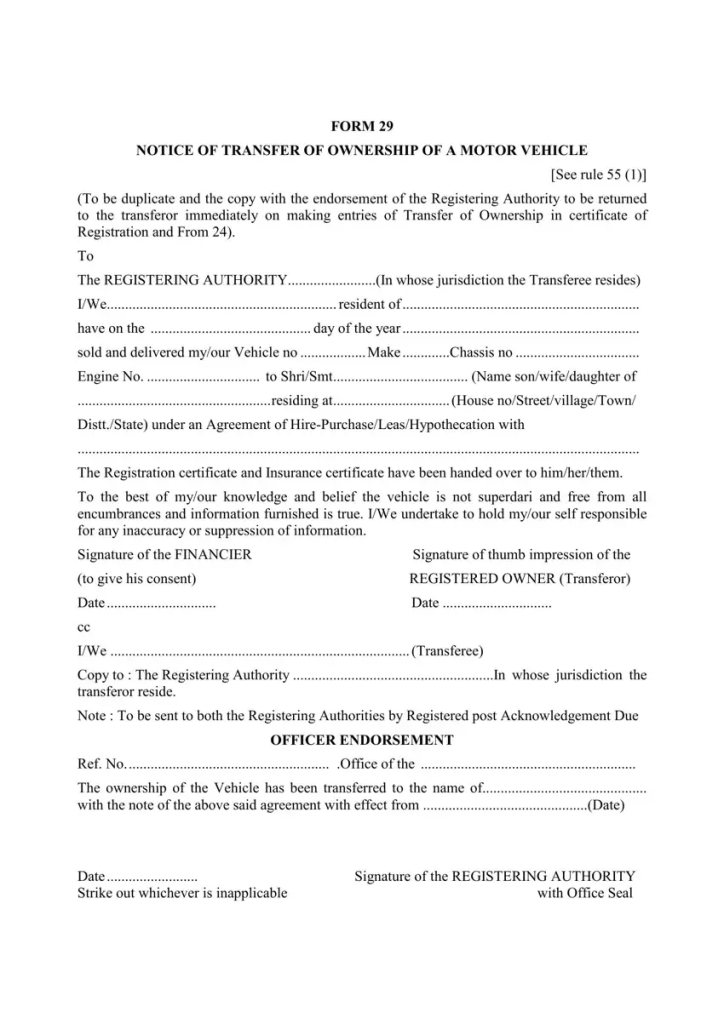
- Form 31 – Application for transfer of ownership due to death
- Form 30 (if required by RTO)
Step-by-Step Process to Transfer RC After Death (Offline Method)
Step 1: Visit the Concerned RTO
Go to the RTO where the vehicle is registered.
Step 2: Fill and Submit Forms
- Fill Form 31
- Attach all required documents
Step 3: Document Verification
RTO officials verify:
- Death certificate
- Legal heir proof
- Vehicle records
Step 4: Pay Applicable Fees
- Transfer fee
- Smart card fee (if applicable)
Step 5: Acknowledgement Receipt
You will receive a receipt to track application status.
How to Apply Online Using Parivahan Portal
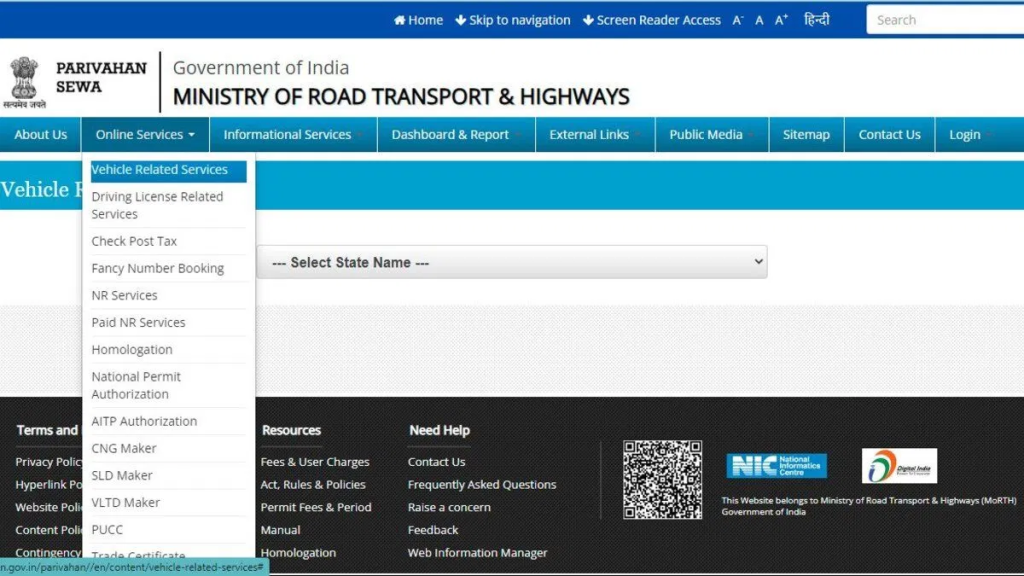
Official Portal Overview
The Government of India provides online RC services through the Parivahan portal under the Ministry of Road Transport and Highways.
Step-by-Step Online Process (RC Transfer After Owner’s Death – 2026)
Before You Start (Important Preparation)
Make sure you have the following ready in scanned or clear photo format:
- Death certificate of the registered owner
- Original RC of the vehicle
- Legal Heir Certificate or Succession Certificate
- Affidavit / NOC from other heirs (if applicable)
- Valid insurance certificate
- Valid PUC certificate
- Applicant’s Aadhaar / ID proof
- Mobile number linked with Aadhaar
Accepted formats are usually PDF or JPEG, and files must be clear and readable.
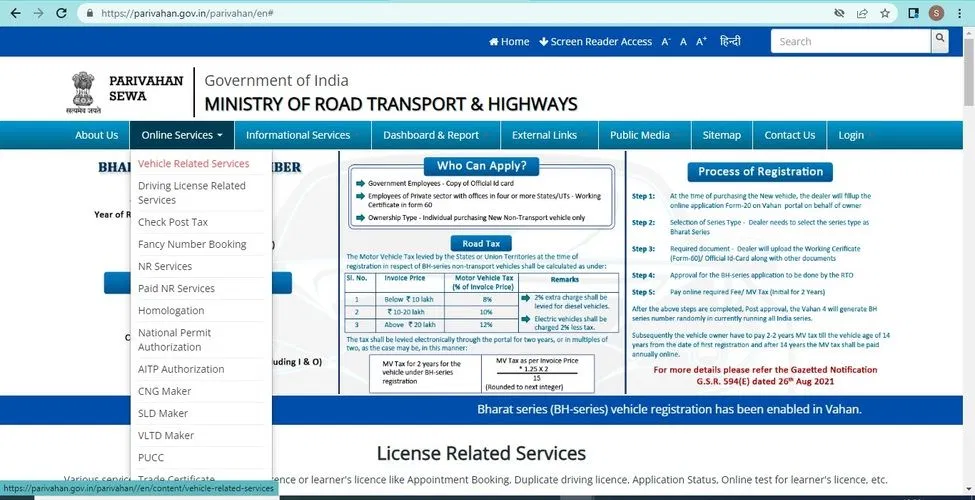
Step 1: Visit the Official Parivahan Portal
- Open the official Parivahan website
- Ensure the website address ends with .gov.in
- Select Online Services
This portal is managed by the Ministry of Road Transport and Highways, so it is legally valid across all Indian states and UTs.
Step 2: Select “Vehicle Related Services”
- Click on Vehicle Related Services
- Enter the Vehicle Registration Number (without spaces)
- Click Proceed
The system fetches vehicle details directly from the national VAHAN database.
Step 3: Choose “Transfer of Ownership – Death Case”
Once vehicle details are displayed:
- Select Transfer of Ownership
- Choose the reason as Death of Registered Owner
- Click Continue
⚠️ Selecting the correct reason is crucial. Choosing a wrong option (sale or normal transfer) can lead to rejection.
Step 4: Enter Applicant (Legal Heir) Details
You will now be asked to enter details of the legal heir:
- Full name (as per Aadhaar and Legal Heir Certificate)
- Father’s / Husband’s name
- Date of birth
- Mobile number
- Address
Ensure:
- Spellings exactly match official documents
- Address matches address proof
Step 5: Enter Deceased Owner’s Details
The portal may auto-fill some details. Verify carefully:
- Name of deceased owner
- Date of death
- Relationship with applicant
Upload the death certificate at this stage if prompted.
Step 6: Upload Required Documents
You will now upload documents one by one:
- Death certificate
- Legal Heir / Succession certificate
- Affidavit / NOC from other heirs (if multiple heirs)
- Insurance certificate
- PUC certificate
- RC copy
- ID & address proof of applicant
Important Upload Tips
- Documents must be clear and upright
- Avoid blurred mobile photos
- File size must be within portal limits
Incorrect or unreadable uploads are the most common reason for delays.
Step 7: Pay RC Transfer Fees Online
After document upload, the portal shows the fee details.
Payment options usually include:
- UPI
- Debit card
- Credit card
- Net banking
Fees may include:
- Ownership transfer fee
- Smart card RC fee
After successful payment:
- Payment receipt is generated
- Application moves to the RTO for processing
Step 8: Book RTO Appointment (If Required)
In some states or cases, the system will prompt you to:
- Select the concerned RTO
- Choose an appointment date and time
This is generally required for:
- Physical document verification
- Original RC submission
Print or save the appointment slip.
Step 9: Visit RTO (If Called)
Carry:
- All original documents
- Appointment receipt
- Payment acknowledgement
At the RTO:
- Documents are verified
- Officer confirms legal heir details
- Biometric verification may be done
If everything is correct, the application is approved.
Step 10: Track RC Transfer Application Status
You can track status anytime through Parivahan:
- Use Application Number or Vehicle Number
- Status updates may show:
- Application under processing
- Approved
- RC printed
- Dispatched
SMS updates are also sent in many cases.
How Long the Online Process Takes
- Submission: 30–45 minutes (if documents are ready)
- Processing: 10–20 working days
- RC delivery: By post or digital RC in DigiLocker
Delays usually occur due to:
- Missing legal heir documents
- Insurance expiry
- Disputes among heirs
Key Advantages of Applying Online via Parivahan
- Fewer RTO visits
- Transparent status tracking
- Secure government portal
- Faster processing compared to fully offline method
- Valid across all Indian states
Just let me know.
RC Transfer When There Are Multiple Legal Heirs
If there are multiple heirs:
- One heir applies for RC transfer
- Other heirs submit a No Objection Affidavit
- RC is transferred to one chosen heir only
Selling the Vehicle
- RC must first be transferred to an heir
- Only then can the vehicle be legally sold to a buyer
RC Transfer for Two-Wheeler vs Four-Wheeler
The process is mostly the same for both.
Differences
- Fees may vary slightly
- Insurance value differs
- Commercial vehicles may require additional permits
How Long Does RC Transfer Take?
- Offline: 15–30 working days
- Online (Parivahan): 10–20 working days
Delays can occur due to:
- Incomplete documents
- Insurance expiry
- Legal heir disputes
How to Check RC Transfer Application Status
You can track status via:
- Parivahan portal using application number
- SMS updates (if enabled)
If delayed beyond normal timeline, visit the RTO with acknowledgement receipt.
Common Problems & Solutions
Missing Legal Heir Certificate
- Apply through Tahsildar / local revenue office
Disputes Between Heirs
- RC transfer will be paused until dispute is resolved
Insurance Expired
- Renew insurance before applying
Vehicle Loan Not Closed
- Obtain NOC from bank or financier
Important Tips to Avoid Rejection
- Ensure name spelling matches across documents
- Keep insurance and PUC valid
- Use proper affidavit format
- Carry both originals and photocopies
- Apply within legal time limit
Frequently Asked Questions (FAQs)
Can the vehicle be used before RC transfer?
Temporarily yes, but legally risky if stopped or involved in accident.
Is a court order compulsory?
Only if there is a dispute among heirs.
Can RC be transferred directly to a buyer?
No. It must first be transferred to a legal heir.
What if the owner died many years ago?
RC can still be transferred, but penalty and additional documents may apply.
Official Website Link
Conclusion
Transferring a vehicle’s RC after the owner’s death is not optional—it is a legal necessity. Completing the process on time ensures:
- Legal ownership clarity
- Smooth insurance coverage
- Trouble-free resale or usage
With the Parivahan online system and proper documentation, legal heirs can now complete RC transfer easily, transparently, and legally in 2026.